COLLECTOR'S COLUMN
And That’s How You Buy Art
A Conversation with Judith Rinehart, of J. Rinehart Gallery
And That’s How You Buy Art
A Conversation with Judith Rinehart, of J. Rinehart Gallery
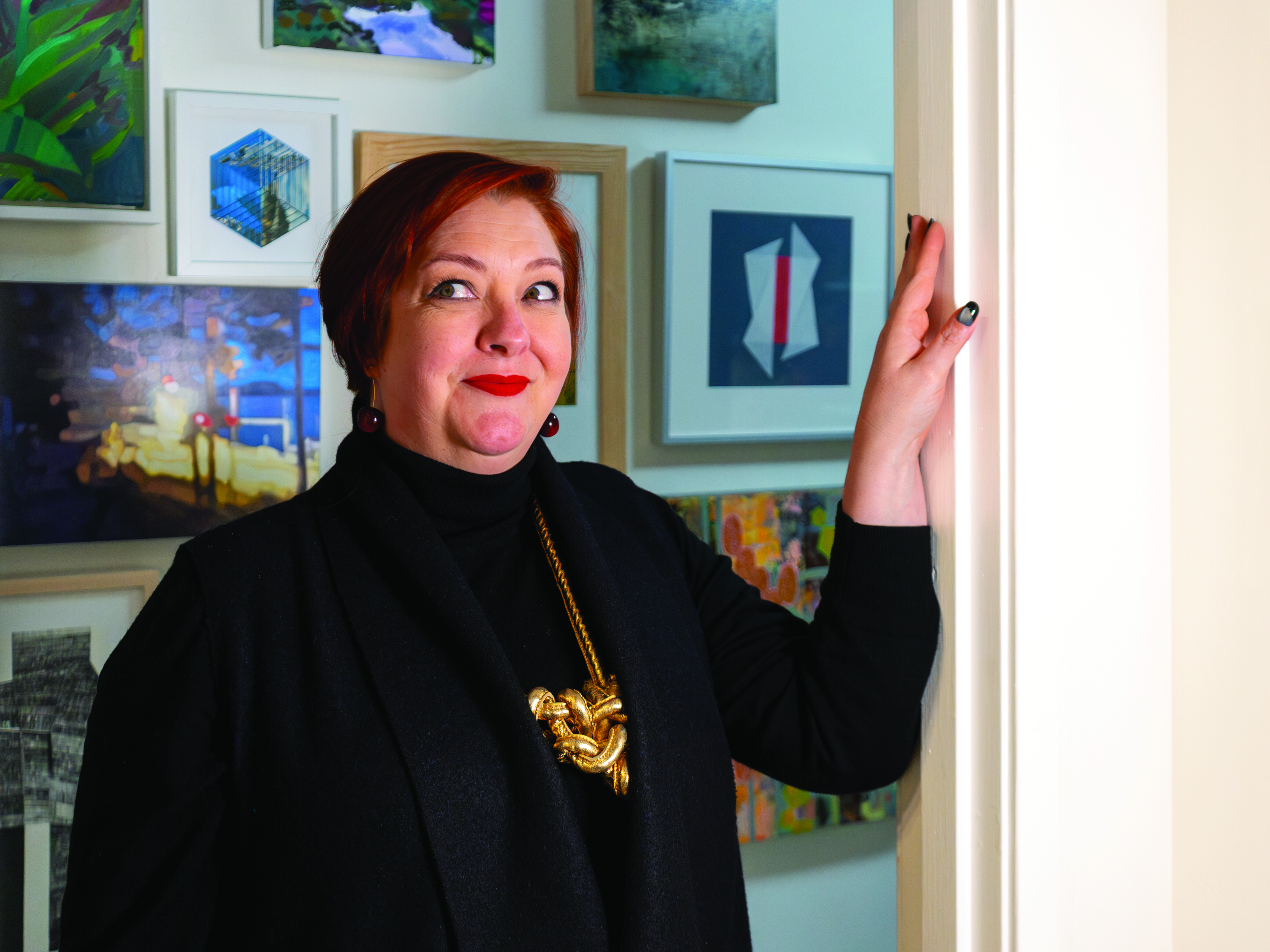
It’s a familiar story. In an act of defiance against a conservative upbringing, Judith Rinehart veered off the expected path when she pursued an art history degree from the University of Utah. She cut her teeth selling jewelry at the mall and credit cards over the phone to put herself through school; in the process, she cracked the code of why people buy what they buy. In 2005, Rinehart arrived in Seattle and joined Foster/White Gallery as a gallery assistant, partly to prove to her parents that an art history degree wasn’t worthless. But it also provided a challenge: If she could sell art, she could sell anything. And boy, did she sell art! But it took years for her to realize that she could buy the art as well.
How did your personal art collection expand once you were working with Foster/White?
Collect art? I hadn’t even started! Here I was, selling art to clients, but the idea that I could go and support an artist was foreign. It hadn’t occurred to me, partly because I didn’t think I was cool enough to be an artist or hang out among them.
That’s not true. You represent a stellar roster of local artists—many of whom have been featured in the pages of PublicDisplay.ART.
Not back then.
Yeah, but you must have been snatching up art at Foster/White, right? You had to have had a killer discount.
This is where the story gets interesting. For the first couple of years working at Foster/White, it never clicked that I could buy art. When I think of how people get involved in buying art and then think of how hard it was for me—and I was ingrained in the community! But I had convinced myself that only super wealthy people bought art.
So what changed?
I stopped by Gail Gibson’s gallery to drop off a flyer for the Seattle Art Dealers Association… and there it was: Saya Moriyasu’s FOO DOGS. And I was like, “Oh my gosh, that’s the best! I love that.” And Gail turned to me and said, “Well, you could buy it.” I replied,* “No, I can't.”* And she goes, “No, you can.” And that was that. Something switched in my head. So then it came down to the nitty-gritty—the how. She’s like “Well, you wanna do payments?” I came back once a month, each time with a hundred dollar bill. It took me six months to pay it off! I still have it. I still love it. It’s right there on my bookshelf. Maybe I needed someone to give me permission; maybe it was just my own fear. But once that barrier came down, I was forever changed. I became an “art collector.” That was a bit of a game changer. Once I realized I was “allowed,” I also found that every dealer wants you to buy art from them, and they will figure out the how for you. Payment plans or layaway—it’s essentially an interest-free payment plan. You put down a hundred bucks, and that’s enough. You’re on your way.
You make it sound so simple. Why would an art dealer sell to me?
That’s their job! Well, not at places that keep prices hidden. Those are just for very wealthy people. When I opened my gallery, I put prices out there, front and center. Transparency allows potential buyers to quickly do the math. Is it affordable? What am I comfortable paying for a piece of art? Is $5,000 my cap? Do I spend this on one piece or four? And if you reach the point of asking yourself these questions, you know it’s time. You’re going to become an art collector.
And then?
And then you figure out what type of collector you are. Do you collect work you love? If so, you’re more likely to buy art that brings you joy, art you’re likely to keep forever. Are you a practical collector? You look at the work and think, That would look great in my hallway alcove. For you, art serves both form and function. And some will see art as a commodity. That doesn’t mean they can’t appreciate it as a work of art, but they’ve done their research and are likely buying the work of an artist they think is on the cusp. The art becomes an investment. The point being that regardless of your intention, galleries will work with collectors.
That’s easy to say. I’ve collected art for years, and yet I still get nervous going into a gallery I don’t know. I’m not thinking, “Oh, boy, they’re going to be happy to see me!” No, I’m walking into this gallery thinking, “How are they gonna treat me?”
I think that’s a big part of it.
A huge part of it.
Yeah, some galleries kind of warrant that reaction, you know? They’re not the nicest. [laughs] I’ve been in some galleries —mostly in New York and LA—where you feel invisible. The exhibit feels like a museum—beautiful. Those are the folks who are shipping pieces to Dubai, to China, to large collections. In a case like that, I understand your hesitancy. You know, if I’m looking to buy a car, I’m not walking into a Ferrari dealership. I know where to go to buy a Honda. The point is: Find galleries that want to work with you and avoid the pressure.
So you’re saying to go where you feel comfortable kicking the tires?
Well, not exactly. I think anyone who’s starting to think about buying art should consider their personal values. Assess what you love, what resonates with you, and how the art makes you feel. And how you’re treated. For me, I’m happiest when I see someone walk into the gallery and then come back. That’s the best thing that can happen. It’s like finding common ground. It signals they like the work I represent and feel comfortable enough to return. I always like to see how their taste is developing or evolving. If they’ve never bought anything, they’re in the process of figuring it out. If they’re starting to find pieces they want, it’s affirming. As an art dealer, you become a conduit of trust. If you like my taste and what I show, I can help you.
And that’s how you sell art.
No, that’s how you buy art!
