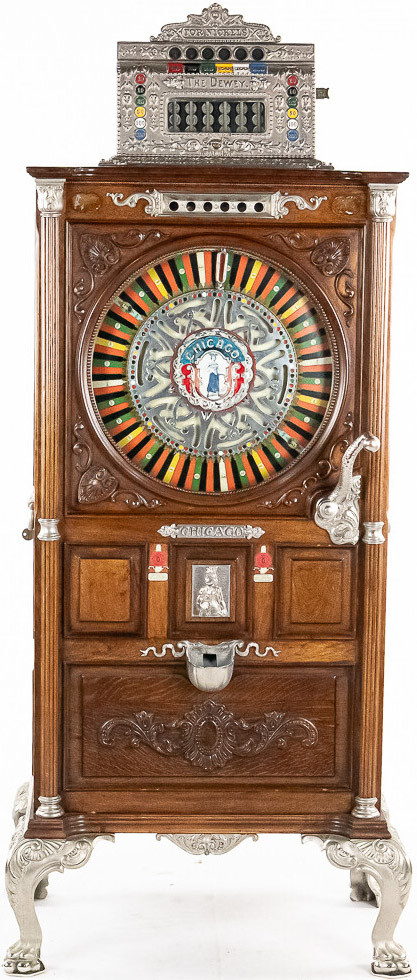
Mills 5 Cent "Dewey" Jackpot Upright Slot Machine
by Unknown Artist
Description
The "Mills 5 Cent 'Dewey' Jackpot Upright Slot Machine," crafted by an unknown artist, stands as a fascinating intersection of art, engineering, and cultural history. This piece, though not created with a painter's brush or a sculptor's chisel, is artful in its design and storytelling. Its presence in the museum attests to the richness of design and craftsmanship during the early 20th century. At first glance, one is immediately struck by the imposing structure of the machine, combining artistry with functionality. The woodwork, with its ornate carvings, evokes the refined elegance of the period. Every detail of the oak cabinet, from the intricately carved flourishes to the polished finish, reflects a deep appreciation for craftsmanship. The use of brass and nickel plating adds a touch of industrial brilliance, creating a compelling contrast with the warmth of the wood. Central to the machine's aesthetic appeal is the colorful spinning dial that dominates the front of the device. This wheel is not merely a mechanical component; it is a canvas of vibrant hues and shapes. The combination of reds, greens, and blacks draws the eye, while the bold 'Chicago' emblem in the center serves as both a focal point and a historical marker, situating the piece within a specific cultural and temporal context. In operation, the slot machine symbolizes the era's fascination with chance and fortune. The sturdy metal arm beckons players to engage with the machine, inviting them into a dance of risk and reward. The sound of coins clinking and the spin of the wheel evoke an atmosphere of anticipation and excitement typical of the roaring twenties. From a design perspective, the machine is an embodiment of the Art Deco movement, with its geometric shapes and lavish decoration. The metal script above the dial, proudly proclaiming "Mills Dewey," aligns with the text-based art that became popular during this time. This harmony between text and form adds an additional layer of depth to the piece, making it more than just a gaming instrument. The figurative embossing and metal embellishments might not only represent technological progress but also symbolize human ambition. During a time of rapid industrialization and urbanization, such machines were fixtures in bustling cities, offering a momentary escape from reality and a promise of quick riches. Sadly, the artist behind this remarkable piece remains unknown. This is not uncommon in the world of early industrial design, where many creators of functional yet beautiful objects went unrecognized. What can be appreciated is the anonymous artist's understanding of how art and utility can coexist. The machine showcases a seamless blend of decorative arts with mechanical ingenuity, testifying to the mind that valued both aesthetics and practicality. This piece fits within a broader narrative of the time, where entertainment and leisure were heavily influenced by technological innovation. Slot machines, like this one, were precursors to the modern gaming industry, and their design reflected contemporary societal values. In conclusion, the "Mills 5 Cent 'Dewey' Jackpot Upright Slot Machine" is a celebration of early 20th-century artistry and engineering. It serves as a reminder of the cultural and historical landscapes that informed its creation, offering viewers a glimpse into a past where the boundaries between art and technology were joyously blurred. While the creator of this work remains shrouded in mystery, their contribution to both design and cultural history continues to be celebrated and appreciated.