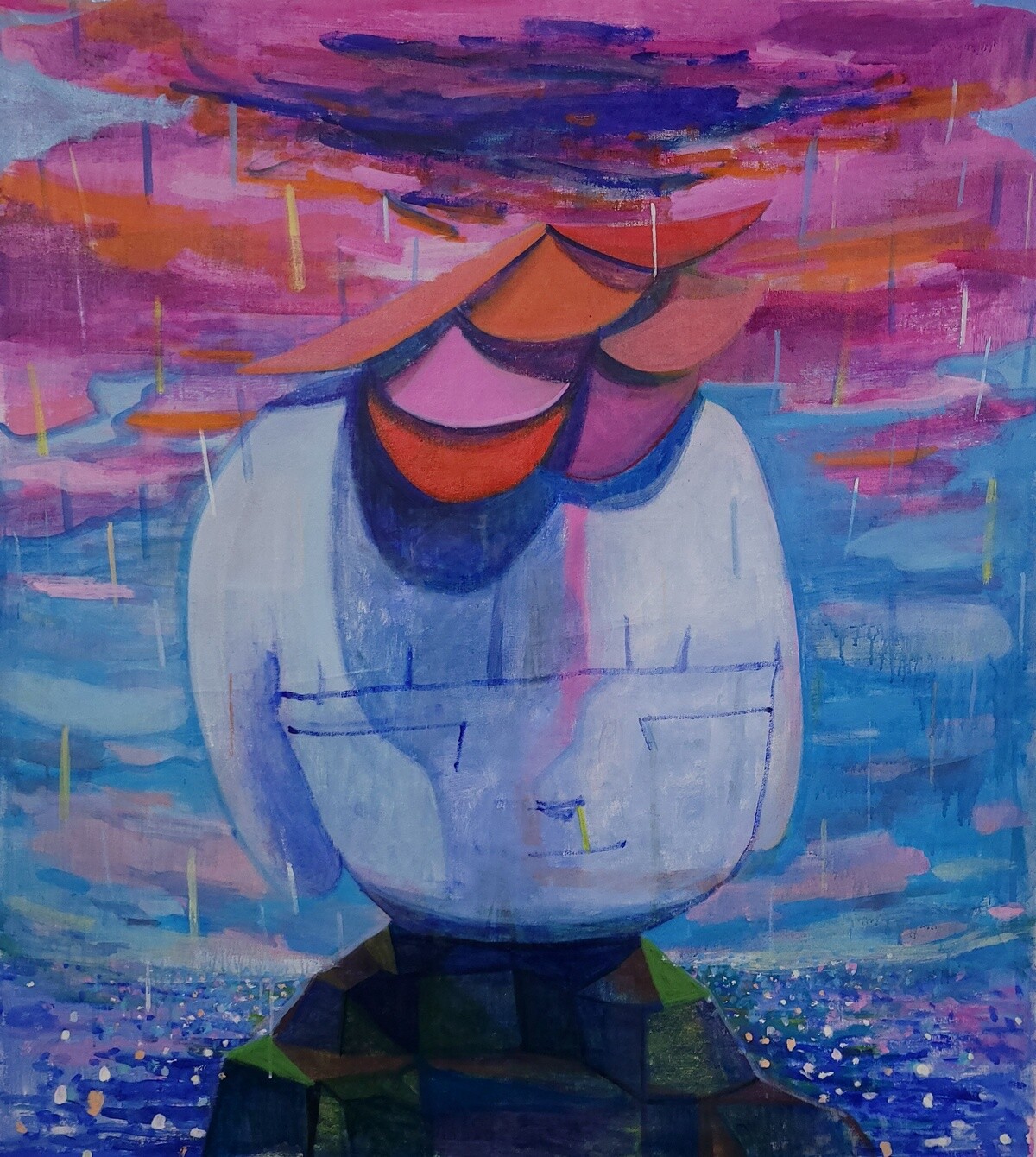
Amy Sherer's "Happy in the Rain" is an evocative piece that captures a whimsical interplay of color, form, and emotion. The painting, crafted in acrylic on canvas, presents a figure whose expression seems serene despite the rain, embodying a sense of peace and acceptance that can resonate universally. At the first glance, the bold use of colors stands out. The sky is a turbulent mix of vivid pinks, purples, and blues, punctuated by the stark, bright streaks of falling rain. This choice of palette creates an atmosphere that is both dreamlike and energetic, suggesting an environment charged with emotion yet oddly comforting. The juxtaposition of vivid hues and the calm central figure creates a compelling tension, inviting the viewer to linger and explore the depths of the piece. The figure itself, with simple, rounded features, is reminiscent of modern cartoon influences, suggesting innocence and introspection. Its facial expression is minimal yet striking-a small smile is discernible, evoking a sense of contentment. This simplicity in form allows viewers to project their own interpretations and emotions onto the figure, making the painting deeply personal and relatable. The composition is cleverly balanced. The boldness of the top of the painting with its dramatic clouds is countered by the stable grounding of the figure at the bottom, enveloped in geometric patches of earthy tones. These geometric shapes balance the dynamics above, perhaps suggesting stability in the chaos, a theme that resonates with many viewers especially in the context of life's unpredictable nature. The rain, depicted with dynamic brushstrokes that vary in thickness, adds a rhythmic pattern across the canvas. This rhythm might symbolize life's hardships, yet in this painting, it feels more like an essential element of the environment rather than an intrusion. The cheerful acceptance of the rain by the central figure suggests resilience, a central theme that can be especially poignant to those experiencing adversity. From a technical perspective, Sherer's acrylic technique is deftly applied here. The layering of paints and the blending of bold colors with softer pastels demonstrate not only finesse but also expressive capability. The methodical approach to layering provides a depth that draws the viewer in, allowing the colors to interact in a way that feels organic and unforced. For artists, there is much to admire in Sherer's manipulation of color and form. The painting showcases a modern sensibility with its abstract forms and vibrant palette while retaining a timeless appeal through its emotional depth. The clear lines and forms are reminiscent of elements from both modern and traditional art, converging into a unique visual language that speaks to both contemporaneity and nostalgia. The use of geometric shapes to ground the figure is a notable technique that adds to the piece's stability amid the chaotic movement above, providing insights into how structural forms in art can anchor a composition both physically and emotionally. Sherer's work often explores themes such as simplicity, emotional resonance, and the interplay between individual experience and universal themes. Unfortunately, detailed information about Amy Sherer is not widely available, but it is evident through her artwork that she possesses a keen eye for color and an intuitive grasp of the human condition. Her ability to encapsulate complex emotions within seemingly simple compositions suggests an artist attuned to both the visual and emotional spectrum. "Happy in the Rain" captures a moment of tranquility amidst chaos, a theme that is as compelling today as ever. The painting invites viewers from all walks of life to find beauty and peace in their own storms, a message that is both universal and deeply personal. Through its vibrant colors, balanced composition, and insightful themes, the artwork continues to inspire and engage, making it a valuable addition to any exhibition or collection.