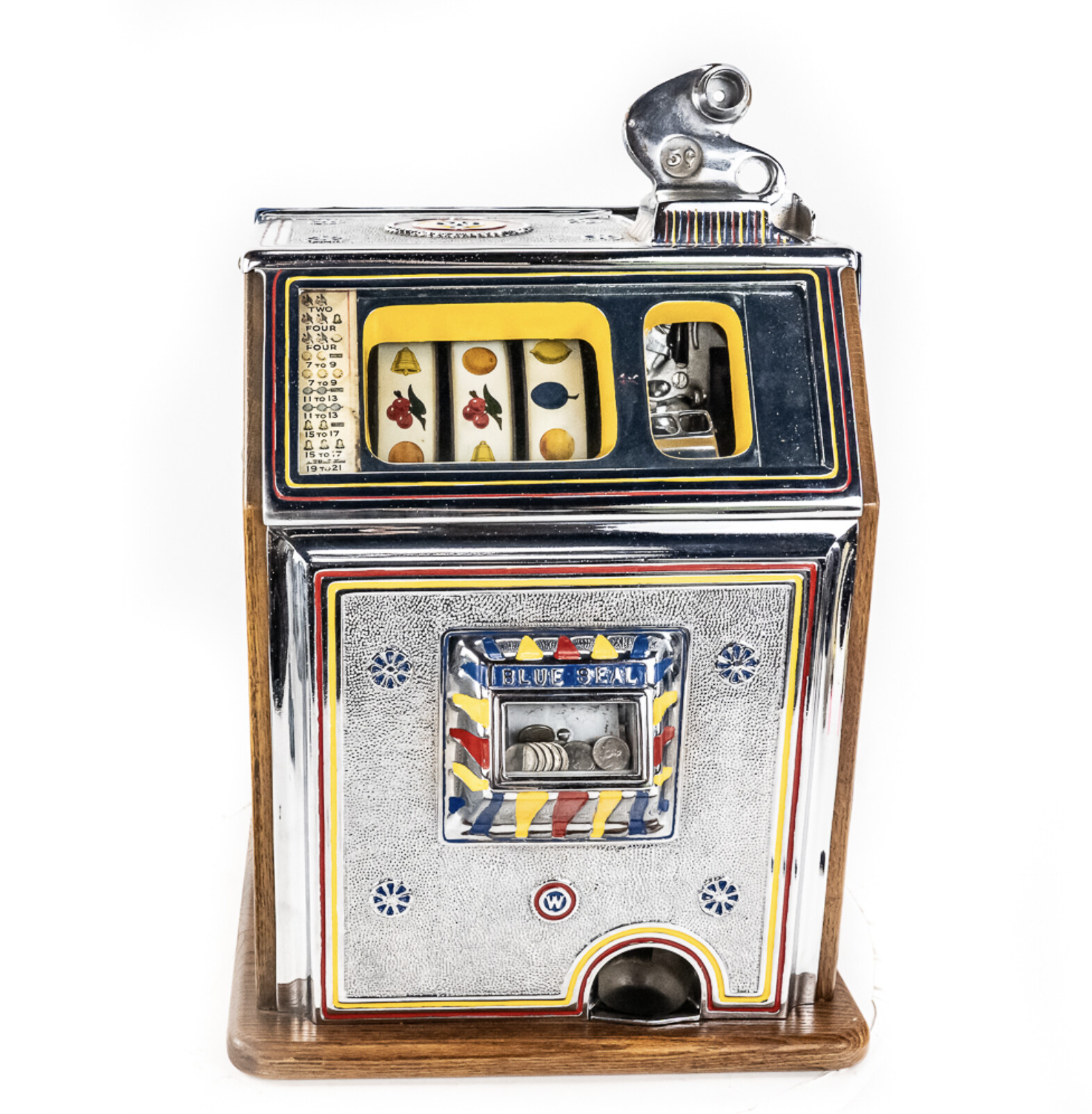
The '1930s Watling Blue Seal 5C Nickel Slot Machine' is a captivating piece that reflects both industrial design and social history. This slot machine embodies the spirit of its era, embodying the hopes, dreams, and excitements of early 20th-century America. The machine's vibrant colors and chrome detailing immediately draw the eye, inviting both art connoisseurs and casual observers to delve deeper into its story. This piece is a perfect blend of function and aesthetic. The primary structure, crafted from metal, is adorned with colorful enamel accents. These colors serve not only a decorative purpose but also played a psychological role in attracting users. The front of the machine reveals the intricate inner workings, with fruits and icons that are quintessential symbols of chance. Cherries, lemons, and plums rotate with each play, offering a visual delight and further emphasizing the theme of luck. The rectangular body is topped with a lever, ready to be pulled by an eager player. This slot machine showcases the craftsmanship of the period with its smooth contours and polished surfaces. Each component was meticulously designed to ensure durability and aesthetic appeal, reflecting the manufacturing standards of the 1930s. The materials used are indicative of the industrial advances of the time, when mass production allowed for both precision and beauty. The Watling Manufacturing Company's Blue Seal series was well-regarded for its reliability and intricate designs. The attention to detail is palpable, especially in the embossed lettering and the small, ornate patterns that accentuate the machine's face. These elements demonstrate the craftsmanship that went into products of both amusement and economic gain during this time. The slot machine is not just an object of entertainment; it is a historical artifact. It speaks volumes about the societal norms and economic conditions of the Depression Era. Slot machines were often found in bars and speakeasies, spots where people sought comfort and distraction from everyday hardships. In this context, the machine serves as a symbol of escapism and optimism. The nickel slots provided affordable thrills, making them accessible to a wide audience. Art professionals might appreciate the machine's ability to bridge the gap between design and fine art. Its three-dimensional form and interactive nature challenge traditional notions of what a painting or a sculpture could be. This piece would be an intriguing study for those interested in the evolution of design and its impact on user interaction. For artists, the machine is a testament to the era's innovative spirit. The convergence of utility and beauty in everyday objects is a principle that continues to inspire modern design. The vivid colors and bold lines that characterize the machine's facade are elements that have permeated artistic movements throughout the 20th century, influencing styles like Pop Art and Modernism. While the artist of this particular piece remains unknown, the Watling Manufacturing Company played a significant role in its creation. Based in Chicago, Watling was a prominent producer of coin-operated machines from the early 1900s onward. Their designs became iconic, cementing their legacy in both the economic and cultural landscapes of America. Without a specific creator to credit, the slot machine stands as a collective representation of the period's artisans. It embodies the confluence of economic necessity and creative expression, serving as a touchstone for those who study the history of industrial design and its socioeconomic implications. This piece is more than just a gaming machine; it is a cultural artifact that offers insights into the complexities of its time. Whether you are an art professional, a history enthusiast, or someone with a curiosity for the past, the '1930s Watling Blue Seal 5C Nickel Slot Machine' is a compelling reminder of the ways in which art and society are intertwined.