Tosca in the Present Tense

Tosca in the Present Tense
Someone should write an opera about the crazy insane way we’re living now. You would start with a huge bang (no overture), then a guy runs into a church to seek sanctuary from ICE (I mean, the police). Then there’s an artist of the church whose “elitist and immoral” work offends the resident sacristan, and is unceremoniously defunded (not at all talking about the National Endowment for the Arts). You could also include torture of prisoners, and “fake news,” and factions of liberals and conservatives and foreign interests all fighting each other, all presided over by a sadistic, woman-hating sociopath.
Because it’s opera, you would also show how peoples’ personal romantic lives are torn apart by living inside all of this mess.
You could write that brand new opera straight from the news, or you could just stage Tosca. Because Puccini’s opera from 1900 has all of that stuff going on in it. It felt a little uncanny to sit in the opera house and feel like I was watching the news, only condensed and heightened and beautiful (with beautiful people with beautiful voices and even more beautiful music). It was uncanny and kind of a little scary.
You may think I am overdoing the political angle, but Puccini was clear about setting his story in a specific time and place: Rome in the year 1800, on the 17th and 18th of June. The romantic story is of a woman, Tosca, whose “mad love” (as the libretto describes it) of the liberal painter, Cavaradossi, and the psychopathic envy of the sadistic power-mad Baron Scarpia, leads to tragedy for all of them.
At that time, since the 1790s Napoleon had been on a tear to take over Europe (I have no idea if he included Greenland in his plans…). He’d invaded Rome, and the Italian peninsula (not yet the official nation of “Italy”) had become a battleground of warring Austrian, French, and Papal troops. The characters of Tosca—Angelotti (the political prisoner who runs into the church to flee police), the nameless church sacristan, Scarpia (the head of police), and the painter Cavaradossi—are each men with very different political views that influence what each of them subsequently do.
The entirety of Act One takes place on June 17 when the characters receive news that Napoleon has won the Battle of Marengo, thereby shifting the political power in Rome. Everyone’s life is suddenly changed and everyone’s emotions get bigger, which is where the love story of Tosca comes in.
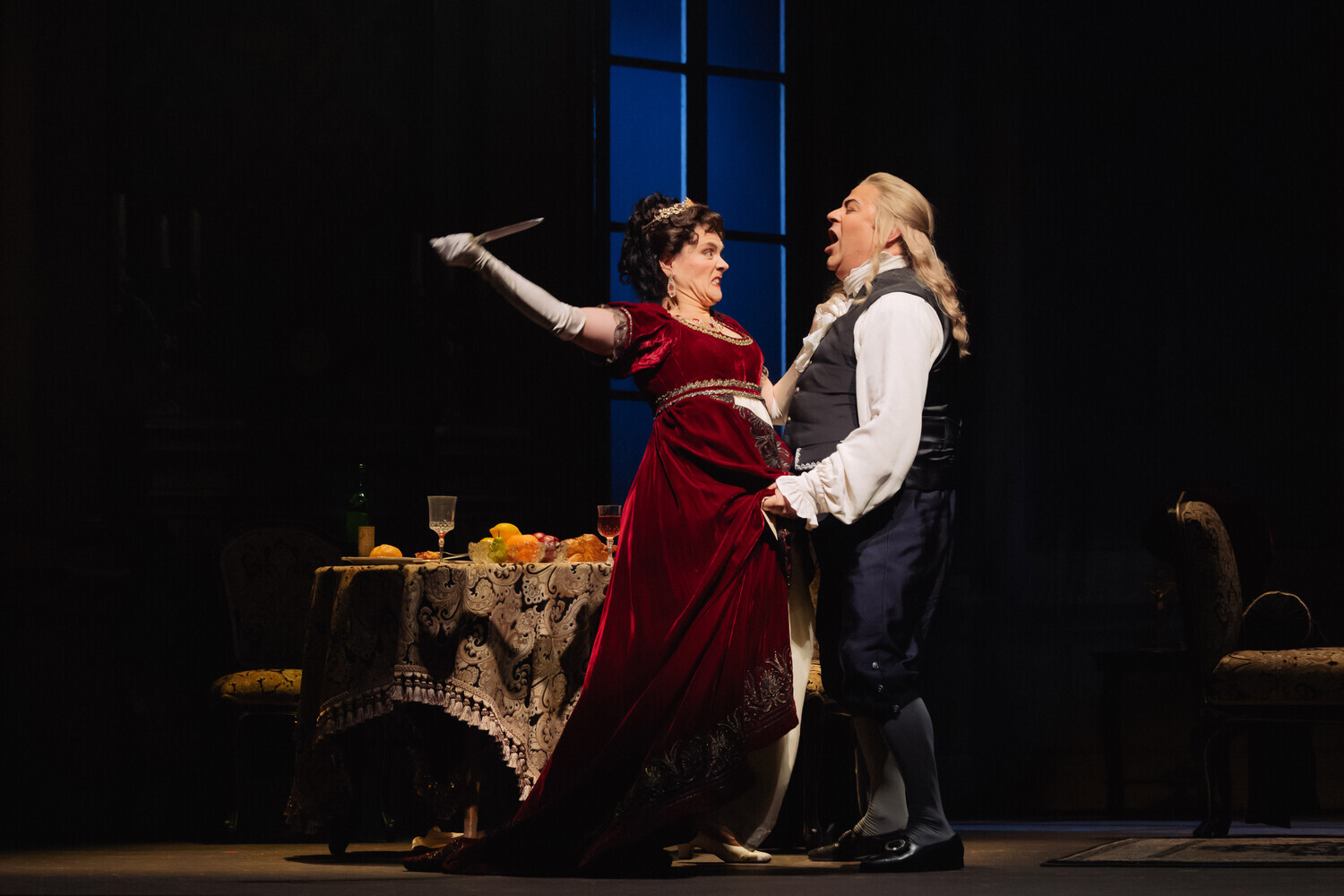
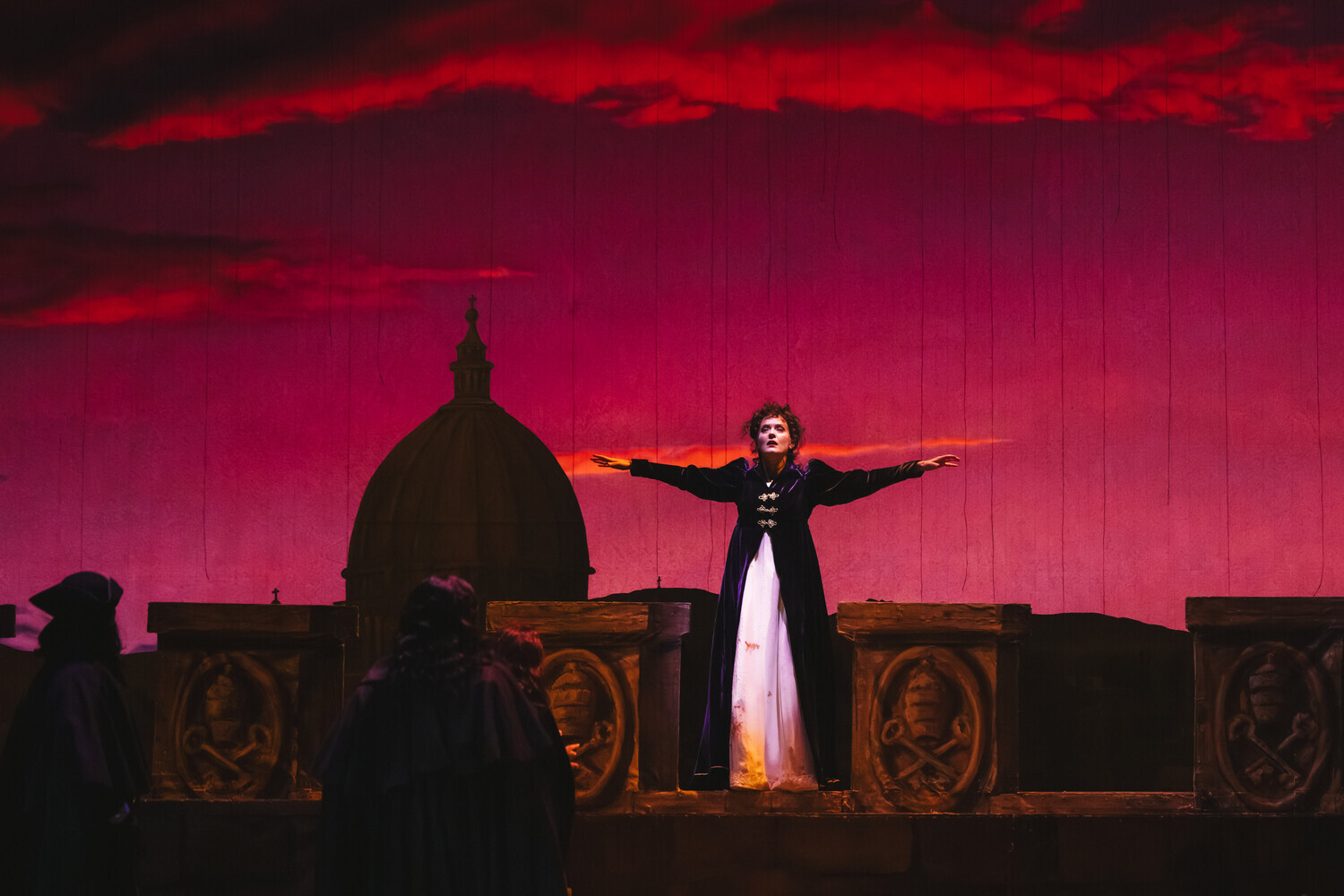
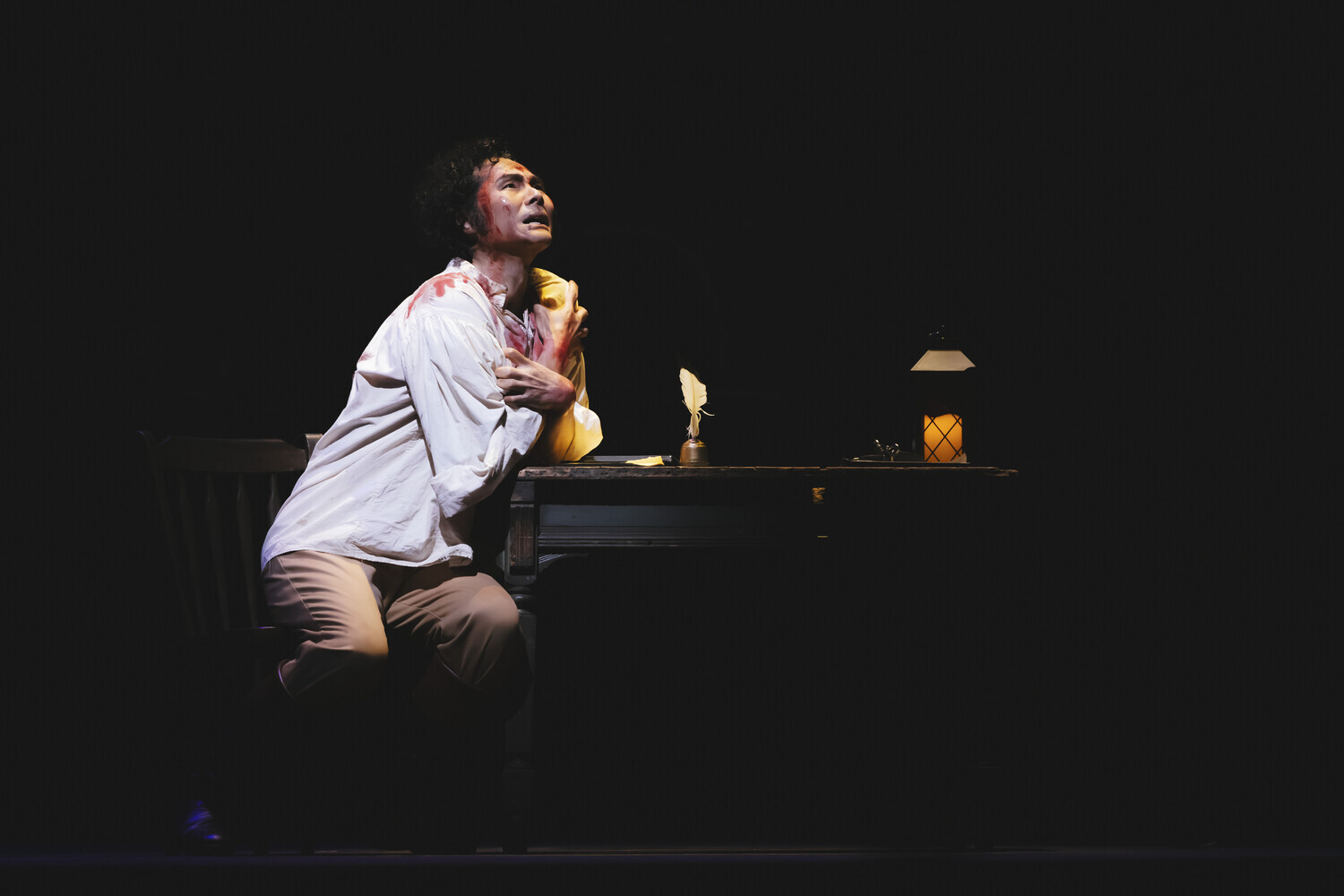
The first character onstage in Seattle Opera's 2025 production of Tosca is Angelotti, performed by Adam Lau, a magnificent bass who made his Seattle debut in 2015. Lau managed to sing the part of a broken, frightened man with both power and compassion. The cast I saw also included soprano Vanessa Goikoetxea as Tosca (who also played Carmen at the Seattle Opera in 2019). Maybe it’s because I’d been listening to Leontyne Price’s Tosca recently, but I couldn’t help wishing Goikoetxea just had a bigger voice. Or maybe it was something about her being the only female voice in Tosca. Craig Colclough was awesomely, hugely evil as Scarpia (kudos to the costume department for the Voldemort hair and clothes) and did a great job of conveying menace, while singing with buttery richness. Rame Lahaj, in his Seattle Opera debut as Cavaradossi, was also striking. He’s got tremendous stage presence, a tenor to keep your eye out for.
But I think the most haunting vocal of the evening was that of the off-stage voice of Anthony E. Kim as the shepherd boy. (Kim also recently made an appearance as one of the genies in this year’s Magic Flute). His voice has a purity and (apparent) simplicity that utterly, cleanly cuts through the sorrow of the scene in which it appears. As if to suggest that just maybe, in the midst of all this, there are still moments of solace or hope.
Opera can be like a mirror that makes everything more big and extreme and visible. Sometimes what you see is hard to look at, and sometimes it’s hard to look away. Like, is that really my culture I’m seeing? Are these really things us human beings do? Thank god there is sometimes music, and a voice that appears to remind you there’s something else.
Seattle Opera's production of Tosca runs at McCaw Hall through May 17.
Rebecca Brown is an American novelist, essayist, playwright, artist, and professor. She was the first writer in residence at Richard Hugo House, co-founder of the Jack Straw Writers Program, and served as the creative director of literature at Centrum in Port Townsend, Washington from 2005 to 2009.
