On Record: Gretta Harley
Seattle's saint of grunge teaches strength through songwriting

On Record: Gretta Harley
Seattle's saint of grunge teaches strength through songwriting
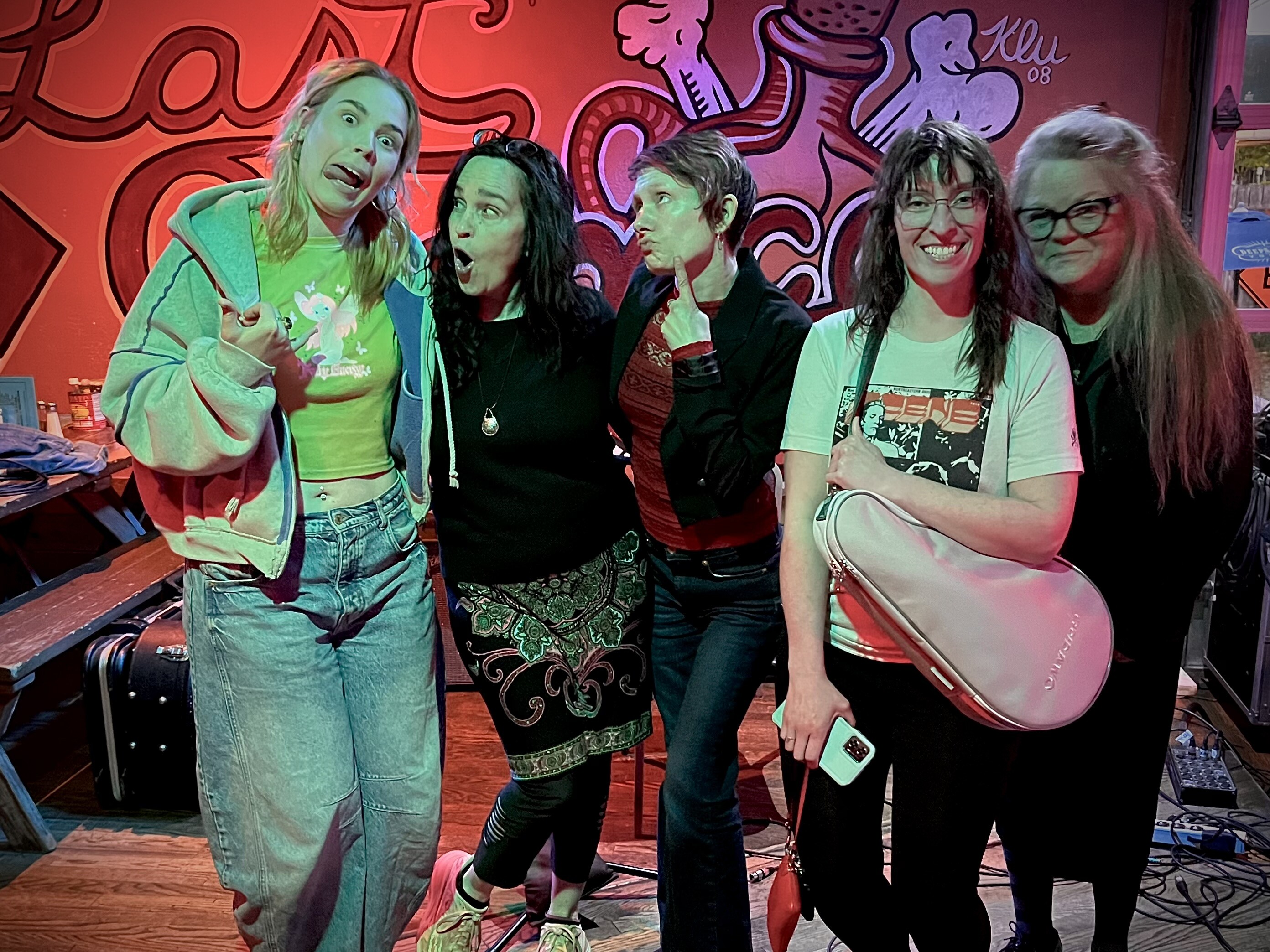
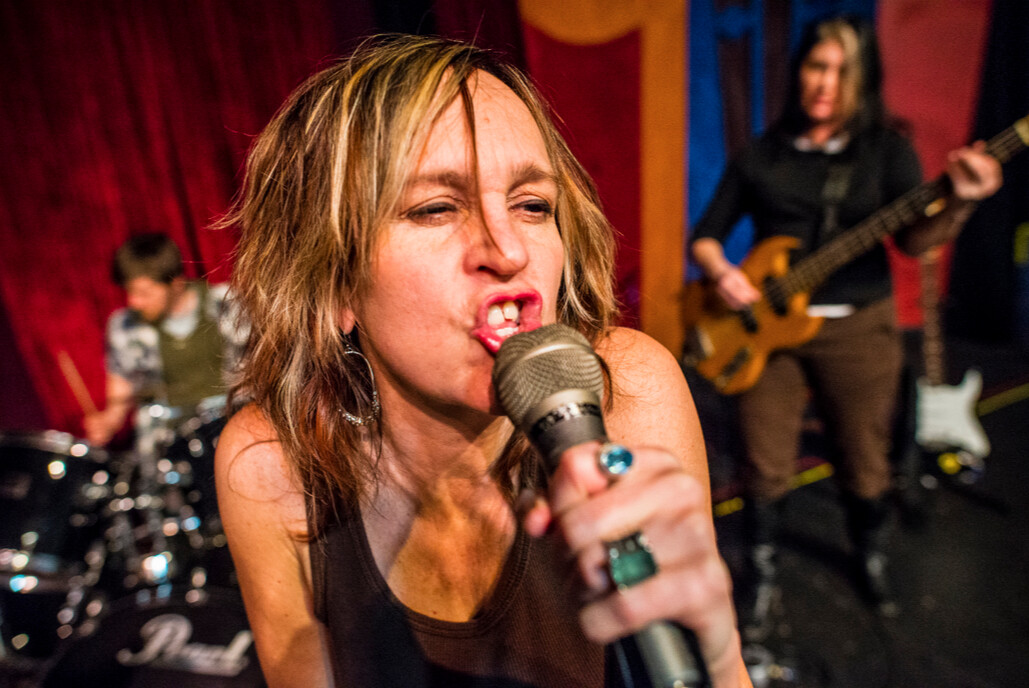
Gretta Harley is known around town for many things, especially her presence in the city's rock scene. The native New Yorker got her start in Seattle music in 1990, as the guitarist, songwriter and singer of hard-rock band Maxi Badd (later rebranded as Danger Gens). Her latest band, Mettle Lark, drops its debut album next month, with a release show scheduled for June 27 at the Royal Room.
Beyond the music, Harley has been creating safe, femme, musical spaces for over 30 years. As one of the founders of Home Alive, a nonprofit organization formed in response to the murder of musician Mia Zapata, Harley's work has combined art and activism for over a decade. In 2013 she co-created (with Sarah Rudinoff and Elizabeth Kenny) These Streets, a musical that explores the unheralded women of the Seattle grunge scene. Harley's latest endeavor expands on her legacy of activism-driven projects by offering a feminist songwriting workshop to help women process experience and reclaim power in these uncertain political times. Wanting to dig into Harley's mindset at the moment, we got her on the line to chat about the benefits of banding together and working in femme-specific collectives.
Ma'Chell Duma: What was the origin story of these workshops?
Gretta Harley: Writing songs helps me to focus, gives me an avenue to funnel thoughts and emotions toward something productive–sometimes pleasing, sometimes cathartic, sometimes comforting, sometimes enraging.The far-right political movement has succeeded in reversing decades of progress for women in a few short years, and we're suffering. Further, there seems to be a growing chauvinist bro culture that spews unapologetically about women belonging in the kitchen, barefoot and pregnant blah blah, desirous to take women's voting rights away. And this after the Dobbs Decision that stripped away federal protection to women’s basic health care.
Since music always helps me sort out my emotions and gives direction to my thoughts, I thought other women who are pissed off like me might want to explore songwriting. So I put out a call on Facebook. I also spoke to a few of my students, and word of mouth brought others.
Duma: And then?
Harley: We held our classes online once a week through the month of April. We all met for the first time in person at an open mic after the course was over to share the new songs, and some of the women performed in front of people for the first time! They all said they felt supported by one another. How beautiful that is.
Duma: What do you think are the benefits of working in a femme collective? How does it benefit the songwriting process?
Harley: I didn’t want to exclude anyone, but I did want to offer a women’s-only space, because women have been injured. Again. Still. And the current re-injury is raw. We are psychically whiplashed, and the macro culture is seemingly rolling with it, and that is mind-bending. I wanted to provide a space where women can explore that injury without filters and without apology; a place where vulnerability isn't something to hide or feel ashamed of.
Girls are taught at an early age that their feelings are too big, their needs are too much, they’re doing it wrong, and no one really wants to hear from them. The patriarchal messages to women (and to men) are often extremely subtle and worm their way into our subconscious. I see the repercussions all the time with the female students I work with who often apologize. I don’t know how these messages seep into nearly every crevasse of our lives, but they do. When I was interviewing women for These Streets, the number one volunteered common talking point, and which shocked me about these badass rocker women, was: I didn’t really belong there. Bullshit! And the told history only supports that myth, because the history has remembered almost exclusively guy musicians.
Women often fake the commodities around power that men are taught to own freely. And also, unconsciously. So when women are with other women, we can explore these topics around power, and rage, and our confusion, and insecurities without apology. (And there’s always learning how not to apologize. One of my class rules was: don’t apologize for your work.)
I should add: I love men. I love working with men. My band is three men and myself. I love the guys and I love our band and our process and our music. But the dynamic is different when men are present in a creative and vulnerable environment.
Duma: How do you feel songwriting factors in to everything, at this time and in this current political situation?
Harley: Music is medicine. I believe that art and music—and community—are the most important things we can do right now. Whether we make it or we support it. Everything beautiful is under threat. Our natural lands, our water, the other species we share the planet with, our educational institutions, our art institutions; our healthcare, our identity, empathy. So art and music is the expression. It is the record keeping, the telling, the witness. The rebellion and the medicine.
Duma: What were some surprises you encountered along the way while teaching the class?
Harley: I've taught a lot of classes, but never one specifically about songwriting; I had to dig for what I thought would be helpful. I needed to really trust myself. I also had to face my own insecurities when it comes to my writing, and admit that I once cared too much about what people thought. Whatever insecurities and challenges I experienced shouldn’t be hidden, but exposed. These confessions helped lay the groundwork for the class.
I also learned how hungry I was to experience the generosity, vulnerability, and honesty of humans, in this era. It surprised the students too how easily everyone felt bonded to one another. Sharing vulnerability is a rung on the ladder of our humanity. While the macro culture is craving strength through brute force while repelling empathy and sincerity, I started to realize, midway, that I created this class to relate to other people.
I knew this, but was reminded again and again that women are brave. And strength isn’t brute force. It’s honesty. It’s vulnerability. It’s generosity. And going deep into self to find one’s truth. And sharing new music to an audience takes a lot of strength and courage. And to finish a song and share it and own it: that’s power.
Duma: What do you have cooking for your next session—or will there be another one?
Harley: At the end of the session I asked if the students wanted to do another, and they all said yes, so we start up again in June. I am collecting inquiries and taking names. Where the first of the series was about building self-esteem, trust in self, routine, and developing a practice, the next class will focus on adding more technical skills in lyric writing, song form, recording, and editing.
Duma: Any other things going on?
Harley: Mettle Lark will be at the Royal Room on June 27th (with Dirt Fishermen, old friends who recently re-banded, and who are coming in from Boise). I am co-producing a benefit concert on September 13 at the Royal Room for an offshoot of Planned Parenthood that helps women get medical care from states that have banned that care. Then, on October 25th I'll be at the Royal Room again to re-stage my solo record, Element 115 (Uup), with an orchestra. It’s the 10th anniversary of that record. There are some great venues in Seattle, and some are facing financial and logistical challenges. So going out to see live music is imperative for the survival of musicians and our music community. ?
Ma’Chell Duma can’t stop writing about Seattle, no matter how many times she tries. A long-time critic, she is also the author of Cardi B: Invasion of Privacy for the acclaimed 33 ? book series. Duma believes the demise of humanity started with the comment section. @jelly_bundy
