At The Kondō Family: Storytellers in Clay, Porcelain Turns Mesmerizing
The exhibit opened this week and runs through next January

At The Kondō Family: Storytellers in Clay, Porcelain Turns Mesmerizing
The exhibit opened this week and runs through next January
If you’ve ever dismissed porcelain as something a bit too perfect, too pale, or too frail, The Kondō Family: Storytellers in Clay is here to change your mind. The Seattle Asian Art Museum’s superb new exhibition, which runs through January 3, 2027, traces three generations of one of Japan’s most celebrated ceramics families, but it’s far from just a survey of technical mastery. It’s also a show about inheritance — of craft, grief, memory, and resilience.
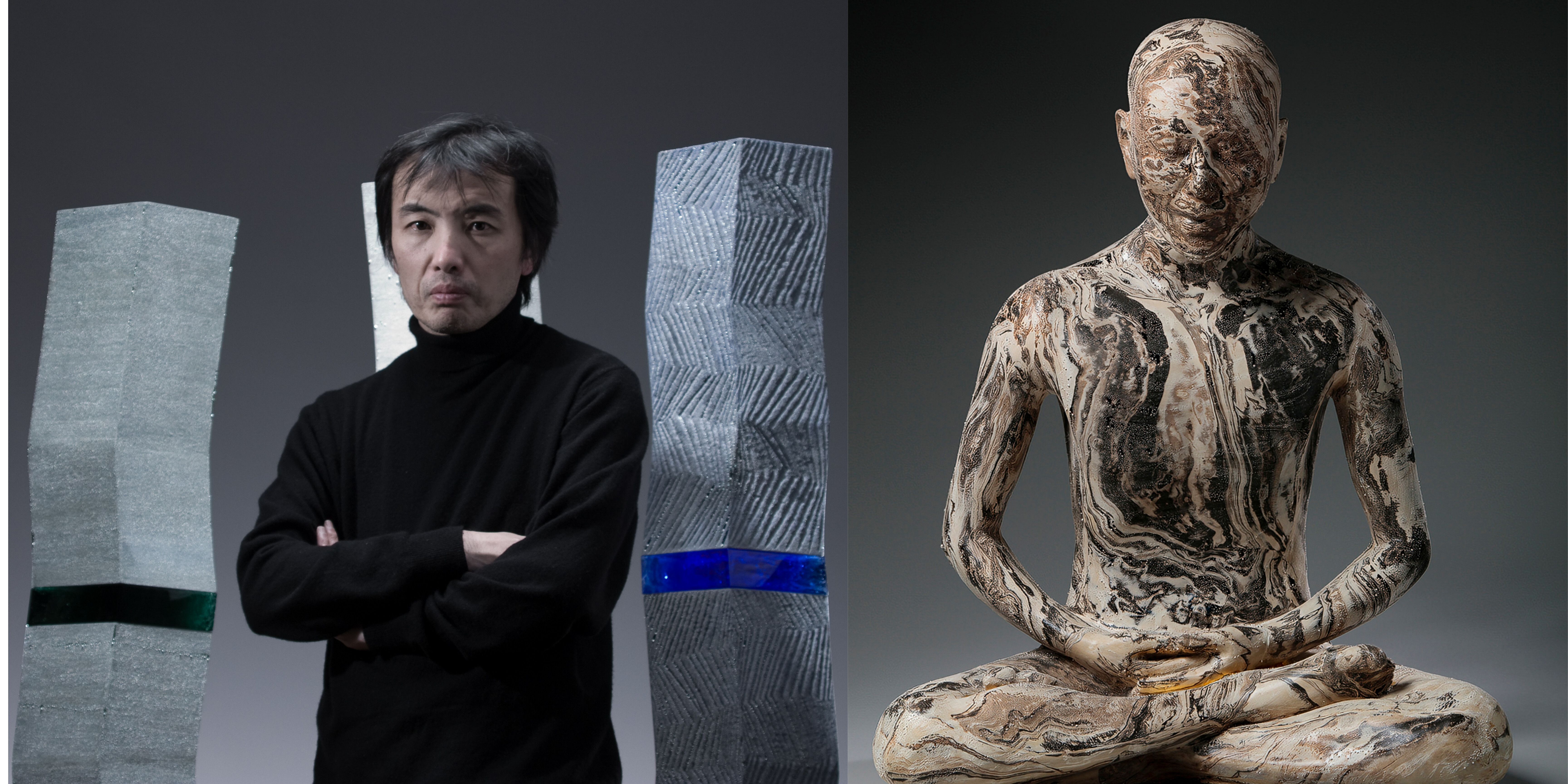
More than 60 works here span 100 years, beginning with Living National Treasure Kondō Yūzō and continuing through his sons before arriving at the exhibition’s standout, at least in this writer’s eye: grandson Kondō Takahiro.
Takahiro’s porcelain has an uncanny, almost supernatural presence. His signature “Silver Mist” glaze — an overglaze of silver, gold, and other metals that beads into tiny droplets during firing — transforms smooth ceramic surfaces into something that looks perpetually wet, as though rain has just passed or tears are still falling. The glaze turns porcelain into something unexpectedly alive and wholly enthralling. In some vessels, the swirls and droplets look almost like stars, and one gets the sense you could stare at them for hours.
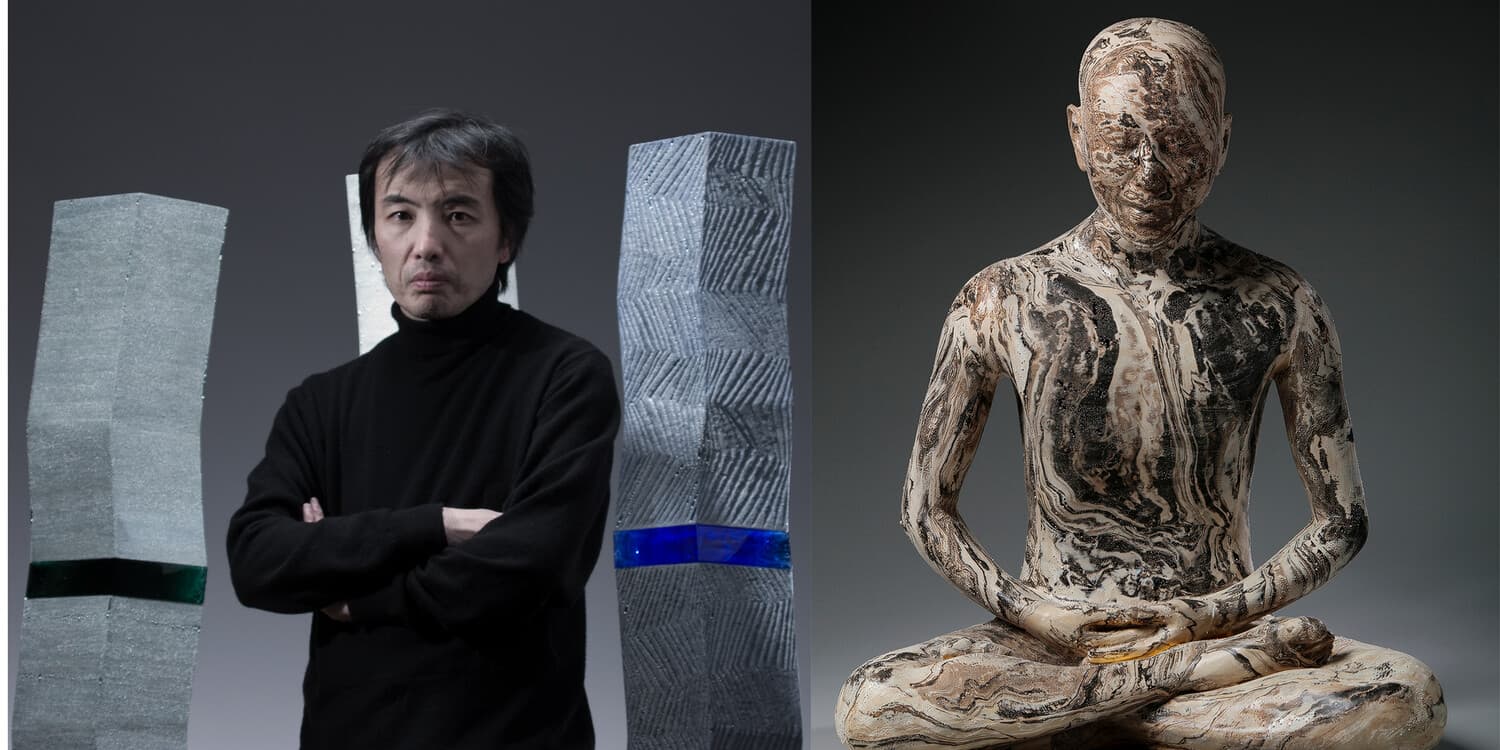
The exhibition becomes especially powerful in works made after the 2011 Japan earthquake, tsunami, and Fukushima disaster. Takahiro’s Reduction sculptures — life casts of his own body seated in meditation — are both memorials to the 20,000 dead and meditations on survival.
Swirling hand-marbleized porcelain evokes the force of the tsunami, while the shimmering Silver Mist clings to the figures like seawater. One of the seated figures bears a dramatic kintsugi (gold lacquer) repair, transforming a firing crack into a reminder of fragility and resilience post-disaster. Nearby, video footage from Japan’s tsunami-stricken coast heightens the emotional impact without overwhelming it.
There’s much more to see, too. Some of the haunting self-portrait heads capture Takahiro’s brow knitted and mouth just slightly askew, as if the artist has just stumbled on some inner revelation. There are monumental porcelain and cast glass monoliths inspired by Scotland’s Ring of Brodgar, and even an interactive installation based on Takahiro’s studio that responds to visitors’ movements. (It feels a bit like Dance Dance Revolution meets a quiet ceramics studio, but intriguing.)
Together, they reveal an artist fascinated by the elements, and particularly water in all its forms — mist, rain, waves, purification, destruction, and renewal.