Bone Deep at the Seattle International Film Festival
SIFF’s cINeDIGENOUS series and other local films star during SIFF’s closing weekend
 Jay Kuehner and Chris S. Nishiwaki•May 15, 2026
Bone Deep at the Seattle International Film Festival
SIFF’s cINeDIGENOUS series and other local films star during SIFF’s closing weekend
Jay Kuehner and Chris S. Nishiwaki•May 15, 2026
As part of SIFF’s cINeDIGENOUS program, which aims to center indigenous filmmaking from around the world, two notable “North American” works engage historical memory in formally contrasting yet deeply consonant ways.
They also speak to a collaborative ethos among a new generation of indigenous artists: both Adam Khalil and Sky Hopinka are founders of the Cousin Collective (“get it made, seen and shared”), and each has supported the other as Cameraperson.
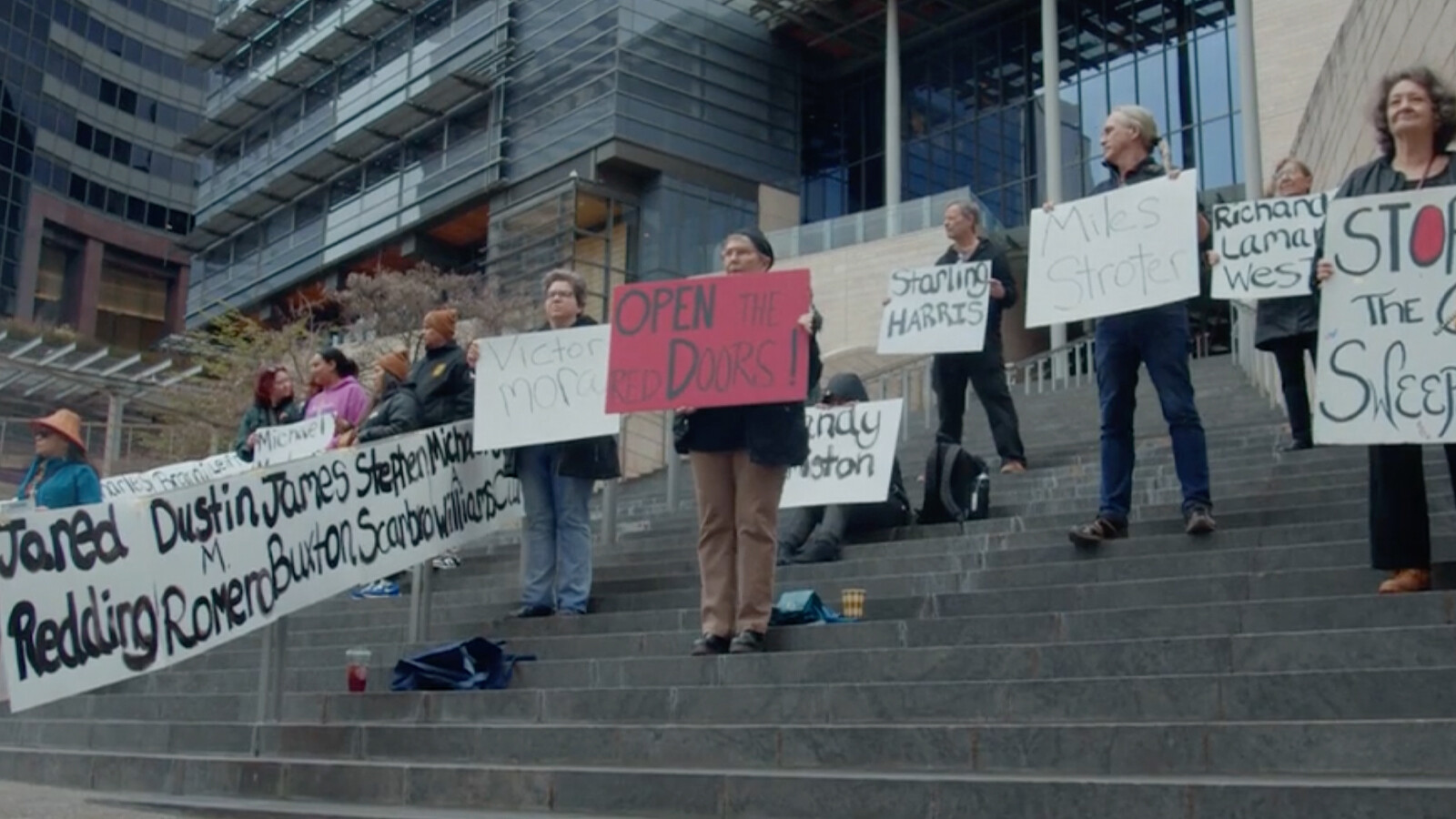
Khalil’s “Aanikoobijigan (ancestor/great-grandparent/great-grandchild) screens on Saturday at 4 pm at the PACCAR IMAX Theater at Pacific Science Center and on Sunday at noon at the SIFF Film Center.
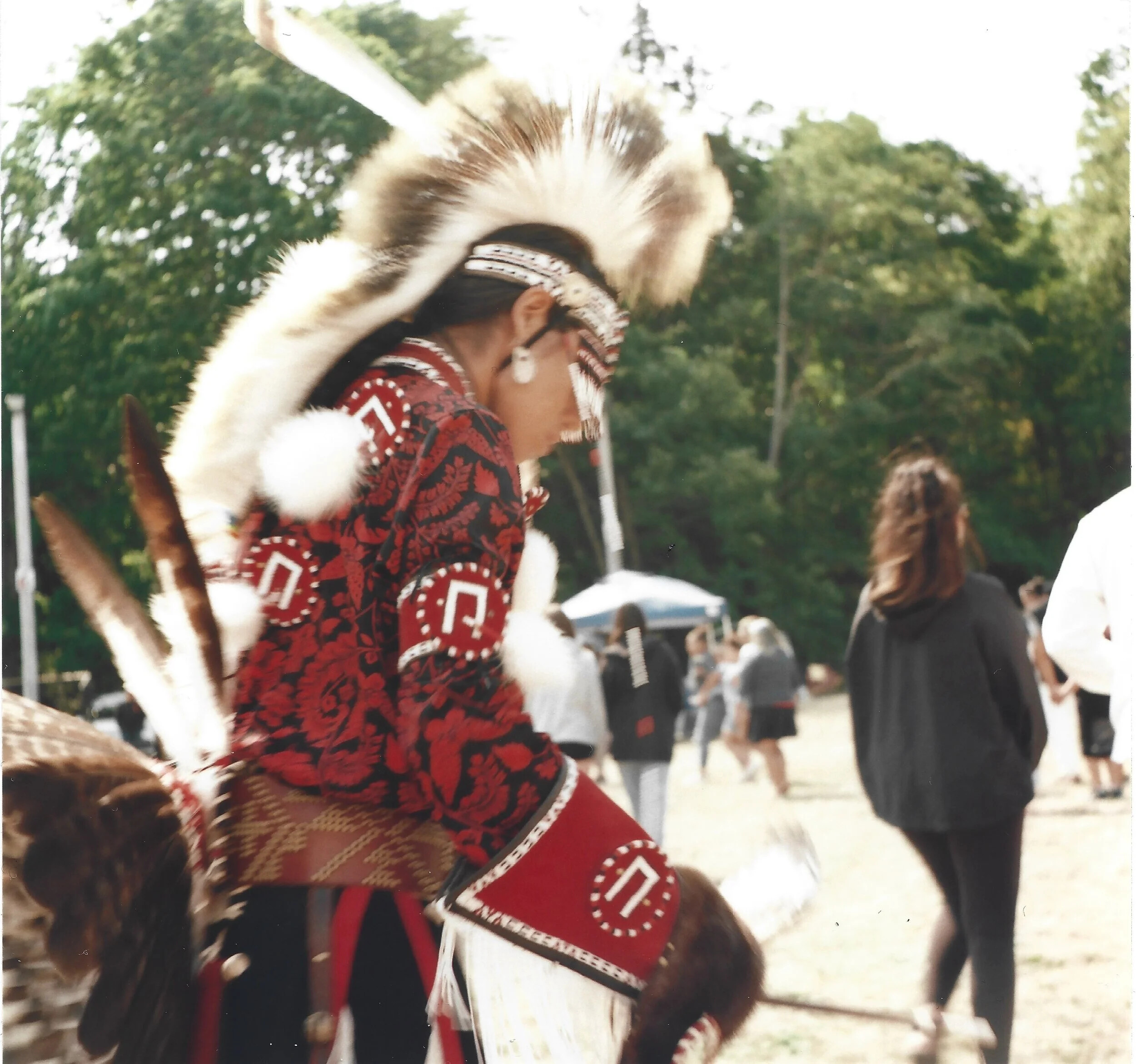
Hopinka’s Powwow People screens on Saturday at 2:30 pm at SIFF Cinema Uptown and on Sunday at 4:30 pm, also at SIFF Cinema Uptown. Hopinka won the 2025 Seattle Film Critics Society’s Hartl Spotlight Award.
Powwow People is among some of the local films featured at this year’s festival. The Washington-made shorts compilation Sound Visions, KEXP DJ Kevin Cole’s documentary RADIOHEART and Chezik Tsunoda’s documentary Under a Million Stars, among other local films, played to packed houses this week.
Phoenix Jones, the rise and fall of a real life superhero screens on Saturday at 5:30 pm and on Sunday at 2 pm. Both shows are at SIFF Cinema Uptown. The Life we Leave screens at SIFF Cinema Uptown on Friday at 1 pm. Again Again is featured on Saturday at 8 pm at SIFF Cinema Uptown.
As for the cINeDIGENOUS program, brothers Adam and Zack Khalil, Ojibwe filmmakers from Sault Ste. Marie in Michigan’s Upper Peninsula, conceived of Aanikoobijigan [ancestor/great-grandparent/great-grandchild] in part as a continuation of their mother’s legacy, which has entailed archive activism and the repatriation of ancestral remains from institutional holdings.
Allison Boucher Krebs (also known as “Chi-Gaumee-Kwe”) was completing her Ph.D. in indigenous information ecology at University of Washington’s Information School when she passed away, and her sons sought to transform her research through their heterodox visual language (their previous collaboration INAATE/SE/ [it shines a certain way. to a certain place/it flies. falls./] employs a variety of filmic techniques to express the ancient spiritual prophecy of the Ojibwe).
Aanikoobijigan works in a similarly experimental style yet shows restraint in responsibility: it is effectively a communal memorial. Its very title enacts the theme of eternal recurrence central to the film’s conception of time and lineage: past and present are coterminous, grandchild and grandparent exist as one.
It is upon this metaphysical foundation that the film asserts its tangible imperative: reclaiming the bones of ancestors from the archeological collections (notably Michigan State University, the Peabody at Harvard) where they have historically been held captive in the name of science.
Working from testimonials by tribal specialists at MACPRA (the Michigan Anishinaabek Cultural Preservation and Repatriation Alliance), woven with oneiric sequences of nature (richly alive) and the hermetic halls of archives (cooly haunted), the film bears witness to the arduous labor that is the legal, ethical, and spiritual return of indigenous life.
For all its conceptual drift, Aanikoobijigan is lucidly pragmatic in its mapping of what defines a rightful place.
If the Khalil brothers draw on the historical date of a landmark federal ruling (The Native American Graves Protection and Repatriation Act of 1990, or NAGPRA), then Hopinka (Ho-Chunk Nation/Pechanga Band of Luiseño Indians) may tacitly refer to 1970 as a point of inception for his second documentary feature, Powwow People (his first documentary feature, ma?ni – towards the ocean, towards the shore, was also shot in the Pacific Northwest). It was in March of that year that, led by Bernie Whitebear (former Green Beret and a Sin-Aikst tribal member originally from the Colville Reservation), the decommissioned Fort Lawton in Seattle’s Magnolia neighborhood was retaken by Native activists, which led to the establishment of The Daybreak Star Indian Cultural Center in 1977.
Although Powwow People never references the incident, it provides the unspoken context for the film, whose crew convened in the late summer of 2023 for a long weekend of shooting: a verité--style record of the proceedings that Hopinka has sculpted into a narrative block of one evening.
Rather than attempting to shoot on the powwow trail, Hopinka elected to host one himself, on the grounds of Daybreak Star, where he could embed himself in the community. The resultant portrait is an intimate, reflexive, and durational view unto the powwow ceremonies: commencing with establishing shots of coordinator Gina Bluebird-Stacona and emcee Ruben Little Head (whose playful, booming locution serves as the film’s abiding narration); homing in on the nostalgic elder hymn singer Freddie Cozad and the young non-binary dancer, Jamie John, who looks to a future in which new dances may emerge. In its mesmeric turn of pure rhythm and movement, the film culminates in an unbroken thirty minute sequence to crown the last dancer standing in the Northern Traditional competition.
The arena becomes an inviolable site; all-comers are welcome, but the camera - handled by both Hopinka and DP Shaandiin Tome (Diné) - eddies reverently inward, absent any overtures to the spectator. At one point Ruben Little Head advises that the camera be put down, lest the recording “turn into National Geographic.” Remaining attentive to the moment, Hopinka establishes a present-continuous form of filmmaking, in which the “continuities of Native life” are remembered, practiced, and put forth for future generations.
For a complete list of films and tickets go to the SIFF website.