Local artists build on rich history of Mexican and Mexican American art
Neplanta Cultural Arts Gallery in White Center will feature a social justice show in May
Local artists build on rich history of Mexican and Mexican American art
Neplanta Cultural Arts Gallery in White Center will feature a social justice show in May
First of all, Cinco de Mayo is not Mexican Independence Day. Cinco de Mayo (May 5th) commemorates the Mexican victory over the French in the Battle of Puebla during the Franco-Mexican War.
In Mexico, it is a minor holiday. Stateside it has grown to an annual celebration of Mexicans, Mexican Americans and their culture. In the Northwest, Mexican and Mexican American artists have contributed to the fabric of the region via their art.
Today, artists such as Cristina Martinez, Jose Rodriguez, Marison Ortega, Jake Prendez and Judy Avitia-Gonzalez continue the rich tradition of Mexican and Mexican American artists in the region.
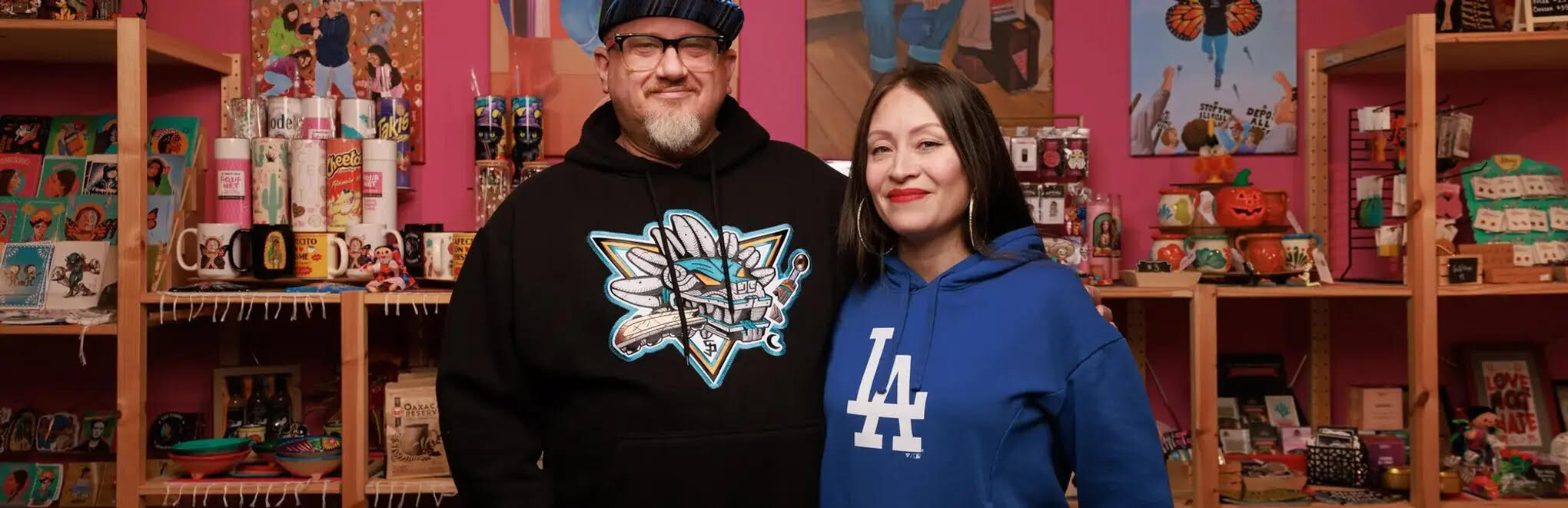
Prendez and Avitia-Gonzalez are showcasing their “Social Justice Art Show” at Neplanta, their White Center cultural arts gallery all month long. Angela Pelayo, Teresa Martinez, Roberta Alvarado, Laura Garzón Chica, Karen Soriano, Lupe Carlos, III, Eileen Jimenez, Jaime Arreola, Jeremy Peña and Bo J. Gonzalez are among the featured artists.
There’s a rich history of contributions to our region from Mexican and Mexican American artists. Emilio Amero taught at Cornish College of the Arts in the 1940’s. Ruben Trejo taught Fine Arts at Eastern Washington University starting in the 1970’s. Alfredo Arreguin, Emilio Aguayo, Daniel Desiga and José Luis Rodriguez Guerra have made considerable contributions to the arts borne of the social justice activism of the 1960’s and 1970’s, and beyond Y2K.
El Centro de la Raza, SeaMar Museum feature art shows year-round. Union Arts Center will be opening the one-woman show “Frida … A Self Portrait” on June 6. Written and performed by the Brazilian artist Vanessa Severo, the play is set on the eve of Frida Kahlo’s death, this intimate show digs into Kahlo’s tumultuous and inspiring life.
Performing artists are also shaping the cultural landscape in the region. The California-born Mexican American theater director Johamy Morales became the first woman of color to become Artistic Director at the Seattle Children’s Theatre when she was promoted last July.
Yahritza Martinez fronts Y Su Esencia backed by her older brothers Jairo and Armando. Their single “Soy el Unico” (I’m the only one) peaked at number 20 on Billboard’s Hot 100 chart in April, 2022. Yahritza was 15 at the time (13 when she wrote the song), making her the youngest artist to chart that year. The single also topped the Billboard’s Hot Latin Songs chart in 2022.
Bailadores de Bronce have been performing around the Northwest since 1972 when Josefina Jaramillo Alvarez founded the group when she was a student at the University of Washington.
Joyas Mestizas has been teaching Mexican folk dance to local youth since 1988. The group also hosts the Pacific Northwest Folkorico Festival. This year’s festival is on Sunday, August 16 at the Brockey Center at South Seattle College.
The Mexican American artist Anouk Rawkson has traveled the world in pursuit of art and art education, living in major arts centers like Paris and New York City. He now calls Seattle home.
Rawkson was featured in a solo show at the Public Display Art Gallery in ArtLove Salon earlier this year. He is also the featured artist on the cover in the current issue of Public Display Art.
"Since my appearance in P.D.A., I have continued to grow and evolve as an artist, exploring new mediums such as screen printing and working on larger-scale canvases,” Rawkson said.
He co-curates "Imminent Mode: Mighty Real," a queer art show that celebrates identity, collaboration, and self-expression, as well as Haunting of a Gallery and Midnight Toy Box.
"These projects allow me to connect with other artists and build spaces where queer creativity can thrive,” he said. "Alongside these curatorial ventures, I’m also developing my own toy line, extending my artistic vision into new dimensions.”
Here are many of the artists who have influenced and continue to influence the arts community.
-Judy Avitia-Gonzalez Avitia-Gonzalez was born in East Los Angeles to Mexican immigrant parents. Her family moved to Seattle in the early 90’s and settled in White Center.In 2023, Judy was selected out of 1,200 nationwide applicants to participate in the National Association of Latino Arts and Culture leadership institute in San Antonio, Texas. Most recently, Judy was one of the guest speakers at the "Celebrate Latina Bilingual Women's Conference" in Seattle. She serves on the board of the White Center Community Development Association. She founded Neplanta in 2018 with Jake Prendez.
-Jake Prendez Prendez is a celebrated Chicano artist and co-owner of the Nepantla Cultural Arts Gallery, who has dedicated his life to creating powerful and evocative art that speaks to the heart of Chicano culture. He was born in San Jacinto California and raised in Bothell Washington. He earned a Bachelor of Arts degree in American Ethnic Studies from the University of Washington and Masters in Chicana/o Studies from Cal State Northridge, in the Los Angeles suburbs.
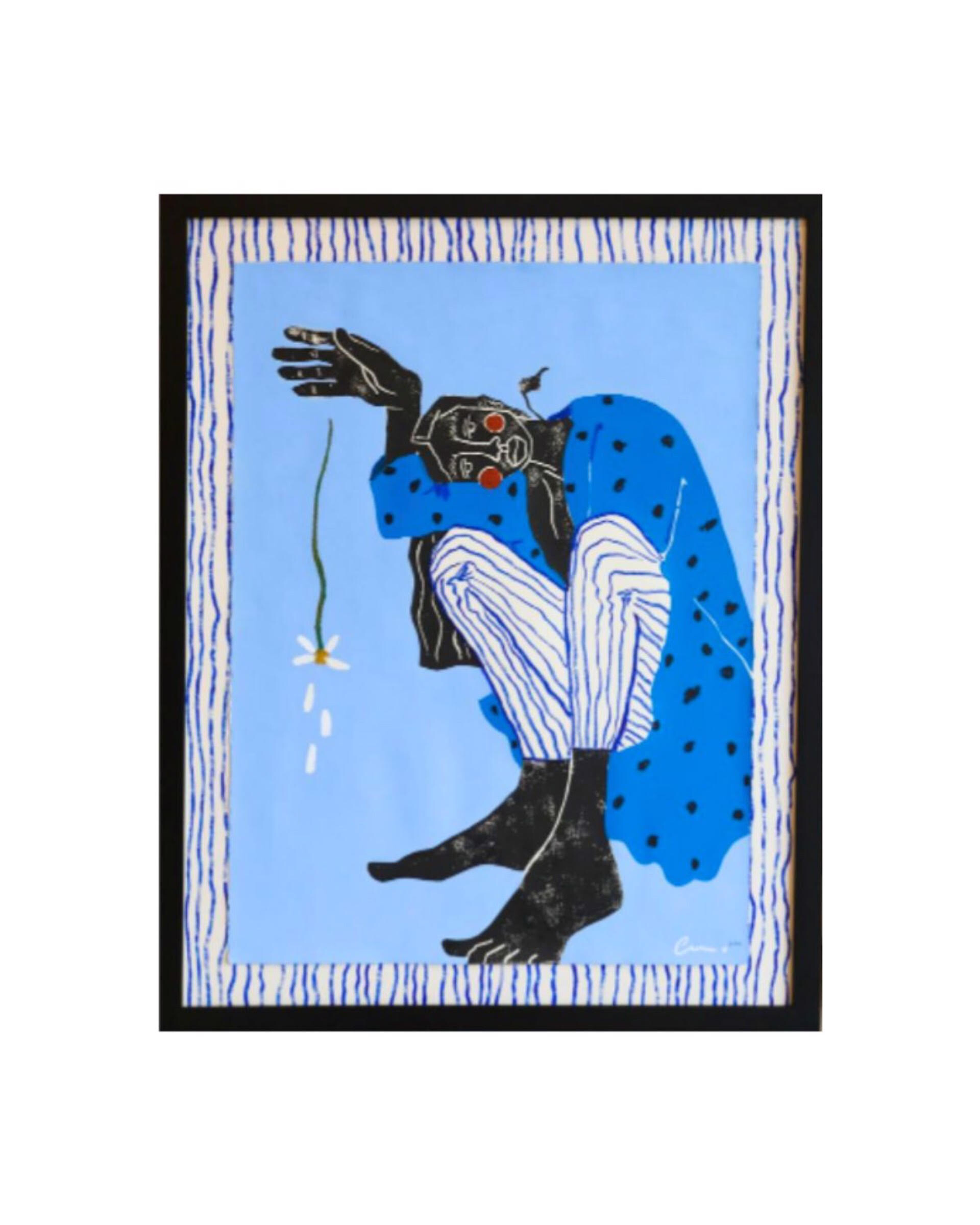
-Cristina Martinez, originally from Tacoma, is now based in Seattle. Last year, she sold out her solo show at TASWIRA Gallery (now Avery Barnes Gallery). She was also selected for the 2025 Seattle Art Fair Select VIP Program. Most recently, she was a finalist for the coveted 2026 Neddy Artist Award. Originally drawn to the creative arts via fashion illustration, she has since evolved into a multi-media artist.
-Alfredo Arregin Arreguín was born in Morelia, Michoacán state, Mexico, emigrating to the United States at 22 to attend the University of Washington where he earned Bachelor of Arts and Master of Fine Arts degrees.
According to the Washington Arts Commission, “He has been honored with many awards and honors over five decades, including from the University of Washington, a Washington State Governor's Arts and Heritage Award in 1986, and several from Mexico, including the Ohtli Award, the highest recognition given by the Mexican government for contributions to the Mexican community abroad. His art is in collections and museums around the world, including the National Portrait Gallery and the American Art Museum (both in Washington D.C.), Seattle Art Museum, Tacoma Art Museum, and in Mexico and Spain. In 2018, the Bainbridge Island Museum of Art hosted a retrospective exhibition of his art, “Alfredo Arreguín: Life Patterns”.
Arreguin passed away in 2023.
-Ruben Trejo Ruben Trejo was born in a boxcar in the Burlington Railroad Yard in Saint Paul, Minn.His parents were Tarascan indigenous people from Michoacan, Mexico.
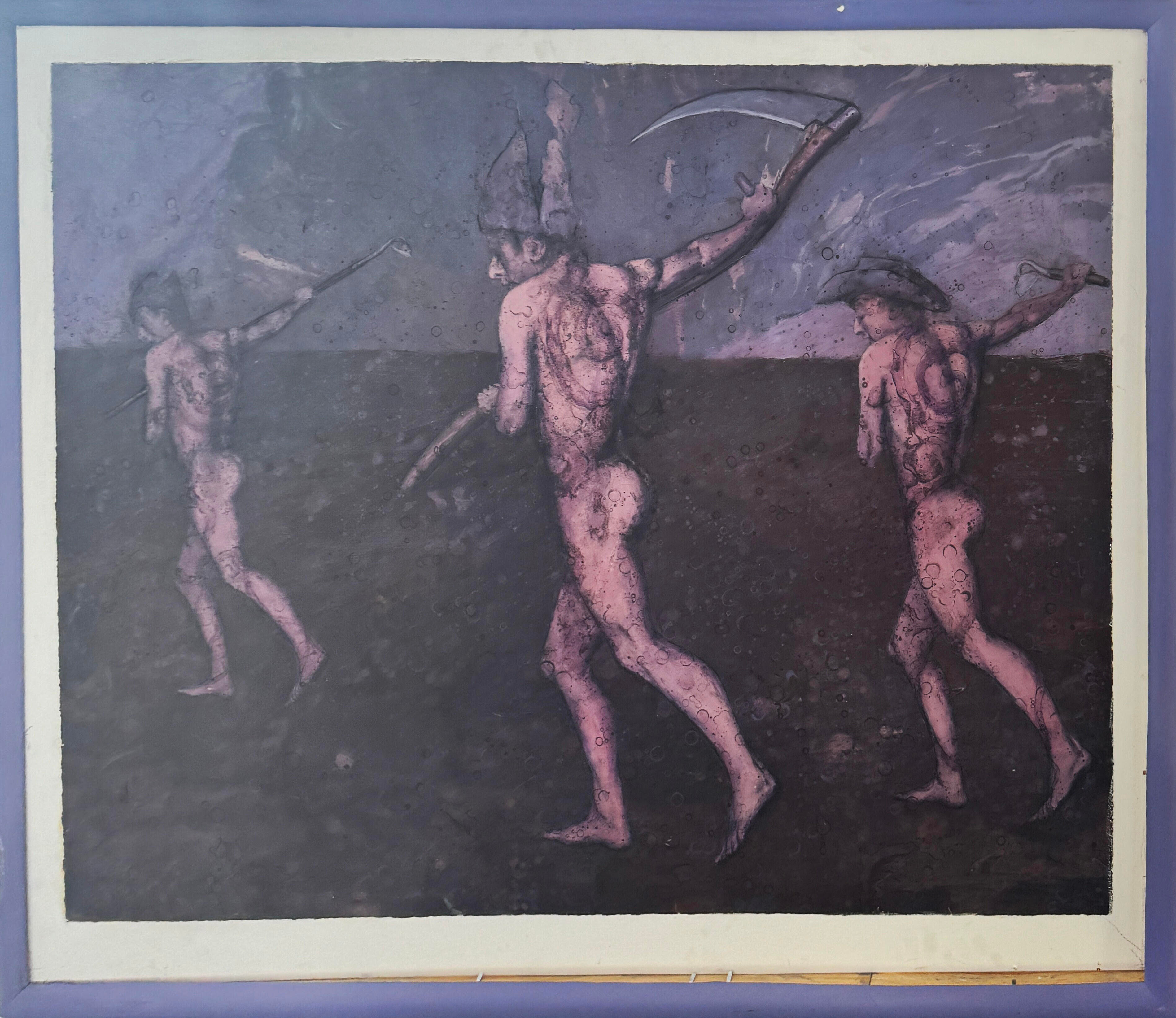
Trejo earned an M.F.A. in sculpture from the University of Minnesota with a minor in Latin American Literature in 1969. Four years later, he moved to Cheney, Wash., to teach Art Humanities and Drawing at Eastern Washington University. He later taught sculpture and later Mexican art. His art has been featured at the Smithsonian American Art Museum, the San Francisco Museum of Modern Art, the National Mexican Museum in San Francisco, and many other collections.
-John Avendaño was born in Los Angeles where he was raised by parents from Cananea, Sonora in Mexico, who encouraged his artistic interests. He moved to Seattle in 1998. Avendaño and his wife Denise took over Fredrick Holmes Gallery earlier this year. Avendaño trained under Hal Reed (a Nicolai Fechin disciple famous for his work at the Walt Disney Co.) at the Art League of Seattle.
“I happened to be an artist that happens to be Latino,” Avendaño said. “I am not a Latino who happens to be an artist.
“I draw upon all of the things that my mom used to talk about.”
-The Esquivel Bros Sadekaronhes and Deyorhathe Esquivel are mixed media artists of Kanien’keha:ke & Mexican descent. Raised in a family of creatives, Sade & Deyo have both cultivated their skills in different art forms including illustration, music production, beadwork and more. Together, they run Rising Sons Media. Their work was featured at MoPop in 2024.
Paul Berger Paul Berger was trained in a classical photographic tradition and would later adopt digital manipulation of electronic images to his artform.
Berger has shown at the George Eastman House in Rochester, NY, The Seattle Art Museum, the Microsoft Corporate Art Collection, Vancouver Art Gallery, The Henry Art Gallery the Portland Art Museum, the Art Institute of Chicago, Los Angeles County Museum of Art, Bibliotheque Nationale in Paris, International Center for Photography in New York, San Francisco Museum of Modern Art, The Museum of Fine Arts in Houston, The Museum of Contemporary Photography in Chicago and The Princeton Art Museum.
Berger, who earned a Bachelor of Arts from UCLA and an M.F.A. from the Visual Studies Workshop in Rochester, served as professor of art at the University of Washington for thirty-five years, co-founding the photography program in 1978.
-Jose Luis Rodriguez Guerra Rodriguez Guerra was educated in Nyssa, Mexico. He would move to Boise where he founded Art Attack Gallery and later settling in Seattle. He has influenced numerous artists in the last five decades in Boise and Seattle, his current home.
“However, the best training has been in the process of making the art, and pursuing the opportunities and experiences with the sculpture studios in Europe and printmaking shops in USA and Mexico,” he told Miroir in 2017.
Rodriguez's unique blend of style and theme offers viewers an opportunity for an intimate reflection on the human journey, inviting them to ponder not only the artwork itself but their own place within these larger narratives.
-Daniel Desiga Desiga rose to prominence during the 1960’s and 1970’s, combining his passion for fine art with his commitment to social justice activism. Some of his notable work includes the murals at El Centro de La Raza in Seattle, as well as a mural depicting Mexican farm workers, painted in 1990 in Toppenish, Wash.
-Emilio Aguayo According to Oscar Rosales Castañeda of the Seattle Civil Rights and Labor History Project at the University of Washington, “Originally from Denver, Colorado, Emilio Aguayo made his way to the Pacific Northwest in the early 1960’s. In 1971, while a student at the University of Washington, Aguayo painted Aztlán, the first Chicano mural in the region. The mural is now prominently displayed at the University of Washington's Ethnic Cultural Center.”